
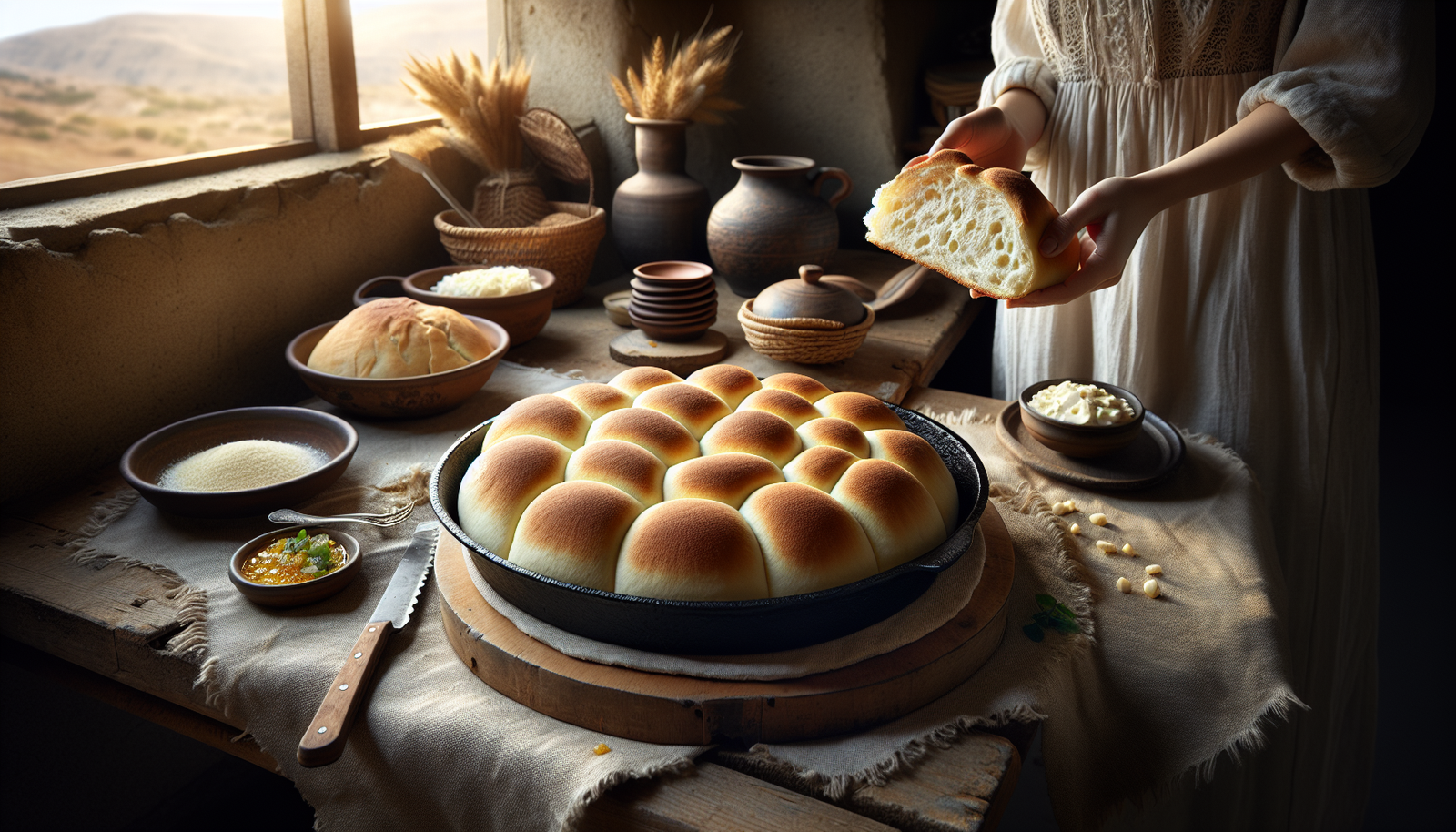
I first discovered lahoh at a Yemenite restaurant in Jerusalem, and I was completely fascinated by this spongy, pancake-like bread. The texture is unlike anything else – it’s got these amazing holes that make it perfect for soaking up stews and dips, but it’s also delicious on its own with a drizzle of honey or some fresh yogurt.
Lahoh has been a staple in Yemenite Jewish cuisine for generations. It’s traditionally made with a fermented batter that gets cooked in a special pan called a mitad, but you can absolutely make it at home in a regular skillet or crepe pan. The fermentation is what gives lahoh its distinctive tangy flavor and creates all those beautiful bubbles that form the spongy texture. Don’t worry if you’ve never worked with fermented batters before – this one is pretty forgiving.
The Magic of Fermented Lahoh Batter
The key to getting lahoh right is patience with the fermentation and getting your pan temperature just right. I like to start the batter the night before, which gives it plenty of time to develop flavor and get nice and bubbly. When you’re ready to cook, the batter should look frothy and smell slightly sour in a good way. The pan needs to be hot but not smoking, and you’ll only cook lahoh on one side – the steam from the batter creates the texture on top.
Getting the Perfect Spongy Texture
This bread is traditionally served at Shabbat meals and holidays, but it’s honestly great any time you want something warm and comforting. I love serving it alongside slow-cooked stews where it can soak up all the flavorful sauce, or sometimes I’ll make it for breakfast with some honey and fresh fruit. It’s also fantastic with savory dips like hummus or baba ganoush.
Ingredients
Method
- In a large bowl, whisk together both flours, yeast, sugar, and salt until well combined.
- Gradually add the warm water while whisking continuously to prevent lumps from forming. The batter should be smooth and slightly thicker than pancake batter.
- Cover the bowl tightly with plastic wrap or a damp kitchen towel. Let it sit at room temperature for 18-24 hours until the batter is bubbly, frothy, and smells slightly tangy.
- When ready to cook, gently stir the fermented batter once or twice. It should be quite bubbly and have a pleasant sour aroma.
- Heat a non-stick skillet or crepe pan over medium heat. Brush lightly with vegetable oil.
- Pour about 1/2 cup of batter into the center of the hot pan, then quickly tilt and rotate the pan to spread the batter into a thin, even circle about 8 inches across.
- Cook for 3-4 minutes without flipping. You'll see bubbles forming all over the surface and the edges will start to look set. The bottom should be golden brown but not too dark.
- Carefully remove the lahoh from the pan using a thin spatula. The top should be spongy with lots of holes, and the bottom should be golden.
- Repeat with remaining batter, adding a little oil to the pan between each lahoh as needed.
Notes
You Might Also Like
Mediterranean Quinoa Salad with Fresh Vegetables and Lemon Dressing
This Mediterranean quinoa salad combines fluffy quinoa with crisp vegetables and fresh...
View Recipe
Easy Kosher BBQ Baked Beans With Smoky Molasses
These kosher baked beans deliver all the smoky, sweet barbecue flavor you...
View Recipe
Easy Kosher Lamb Burgers With Fresh Mint (No Yogurt)
These easy kosher lamb burgers are seasoned with fresh mint and garlic,...
View Recipe
Perfect Kosher Lamb Shawarma Rice Bowls
Tender kosher lamb shawarma with warm Middle Eastern spices served over fluffy...
View Recipe