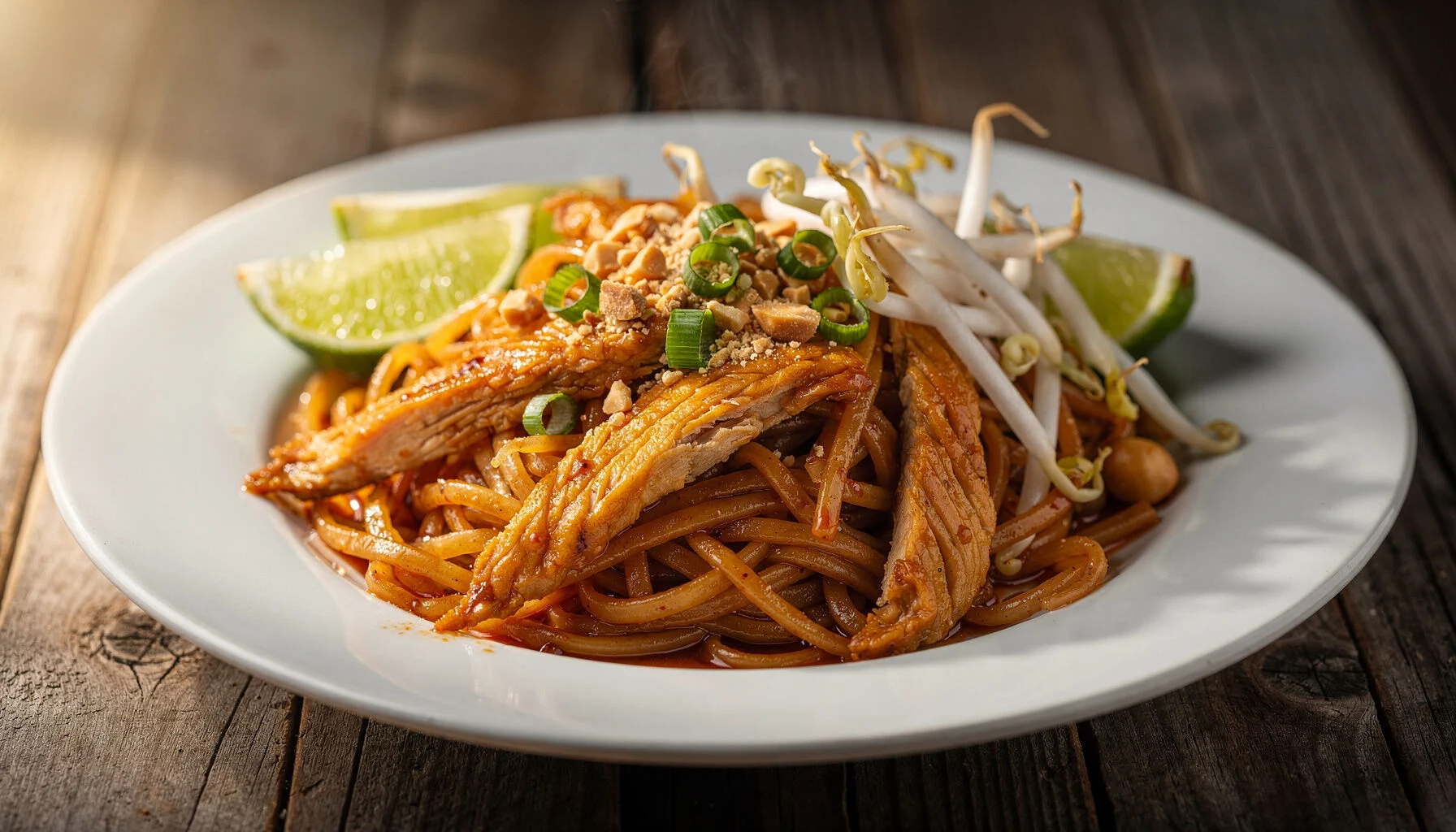
Chicken pad thai has chewy rice noodles stir-fried with chicken, egg, carrot, bean sprouts and scallions in a sweet, tangy sauce, finished with peanuts, lime and cilantro.
Building Savory Depth
Traditional pad thai gets its savory depth from fish sauce. Here, soy sauce and a little mushroom powder provide it, with rice vinegar and tamarind for tang and brown sugar for balance. Soak the noodles until just pliable, have everything prepped, and stir-fry quickly over high heat.
Kosher Notes
Traditional pad thai often includes shrimp, which isn’t kosher, and fish sauce, which many people don’t cook with chicken. This version uses neither. It’s a meat (fleishig) dish. Use soy sauce, tamarind and rice noodles with a reliable hechsher.
Serving
Serve right away. Leftovers keep for 2 days; reheat in a skillet with a splash of water.
Ingredients
What I use for this recipe
As an Amazon Associate I earn from qualifying purchases.
Method
- Soak rice noodles in warm water according to package directions until just barely tender. They should still have a slight bite. Drain and set aside.
- Whisk together all sauce ingredients in a small bowl until sugar dissolves. Set aside.
- Heat 1 tablespoon oil in a large wok or skillet over medium-high heat. Season chicken pieces with salt and pepper.
- Add chicken to the hot pan and cook until golden and cooked through, about 5-6 minutes. Remove chicken and set aside.
- Add remaining 1 tablespoon oil to the same pan. Pour in beaten eggs and scramble until just set, breaking them into small pieces. Push eggs to one side of pan.
- Add garlic and carrots to the empty side of pan. Stir-fry for 30 seconds until fragrant.
- Add drained noodles and sauce to the pan. Toss everything together, working quickly to coat noodles evenly with sauce.
- Return chicken to pan along with bean sprouts and half the scallions. Toss for 2-3 minutes until heated through and noodles are tender.
- Remove from heat and squeeze fresh lime juice over the dish. Toss once more.
- Transfer to serving plates and garnish with chopped peanuts, remaining scallions, and cilantro if using.
- Serve immediately with lime wedges on the side.
Notes
Get a Shabbat menu every Thursday
A main, sides and a dessert from our kitchen, all kosher together and ready to cook. Free, and you can unsubscribe anytime.
One email a week. We never share your address. Privacy policy
You Might Also Like
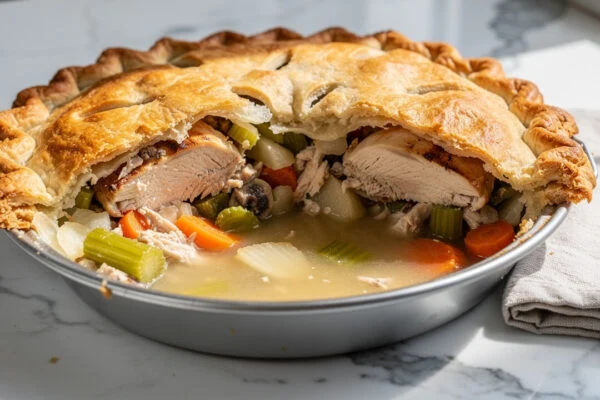
Classic Kosher Chicken Pot Pie with Flaky Pareve Crust
This comforting kosher chicken pot pie features tender chicken and vegetables in...
View Recipe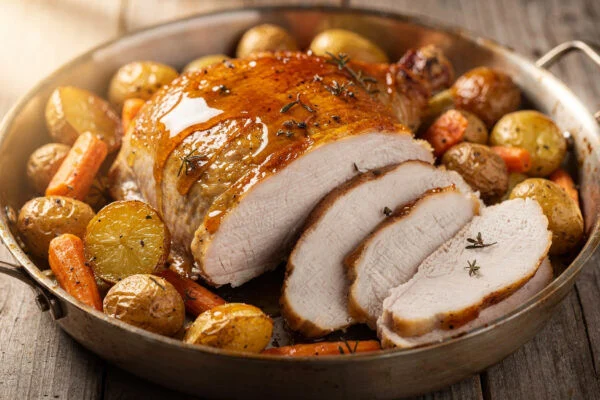
One Pan Kosher Honey Glazed Turkey Roast
This one-pan kosher turkey roast gets perfectly caramelized with a honey-Dijon glaze...
View Recipe
Classic Kosher Dill Pickles – Crispy Homemade Recipe
Learn how to make perfectly crispy kosher dill pickles at home with...
View Recipe
Israeli Egg Salad in Pita: Sabich-Style Street Food Breakfast
This Israeli-style egg salad pita captures the bold flavors of sabich street...
View Recipe