
Every year when I set our seder table, I love putting out three different versions of charoset. It’s become our family tradition to taste and compare these distinct styles from Jewish communities around the world. The kids always argue about which one’s best, though honestly, they each have their own perfect moment during the meal.
Charoset represents the mortar our ancestors used to build structures in Egypt, but each Jewish community developed its own interpretation over centuries. The Ashkenazi version I grew up with combines sweet apples and crunchy walnuts with wine and cinnamon. It’s chunky and fresh tasting. Sephardic charoset takes a completely different approach, often including dates and figs along with almonds, creating something that tastes almost like candy. The Yemenite version surprised me the first time I made it. It’s much more paste-like and intensely spiced with ginger and cardamom.
Three Distinct Charoset Traditions
Making all three isn’t actually much work since none require cooking. The key is getting your ratios right so each mixture holds together but isn’t too wet. I’ve learned to make the Ashkenazi version just before serving because the apples can get mushy if they sit too long. The other two actually improve after sitting for an hour or so, which lets the flavors meld together.
Timing Tips for the Perfect Seder
These three styles give everyone at your seder table something to enjoy, and they spark great conversations about Jewish history and traditions. I serve them in small bowls with little spoons so people can try each one with their matzah during the appropriate parts of the service.
Ingredients
Method
- Peel and core the apples, then chop them into small, uniform pieces about 1/4 inch in size.
- In a medium bowl, combine the chopped apples and walnuts.
- Add the wine, cinnamon, and honey. Mix gently until everything is well combined.
- Taste and adjust sweetness with more honey if needed. The mixture should hold together when pressed but not be soggy.
- Cover and refrigerate until ready to serve. Best used within 2-3 hours to prevent apples from browning.
- Chop the dates and figs into small pieces, removing any tough stems.
- In a food processor, pulse the dates and figs a few times until they form a chunky paste.
- Add the almonds, wine, cinnamon, and ginger. Pulse until everything is combined but still has texture.
- Transfer to a bowl and let sit for 30 minutes to allow flavors to meld.
- Add more wine if the mixture seems too dry, or more nuts if it's too wet.
- In a food processor, combine dates, raisins, and almonds. Pulse until finely chopped.
- Add ginger, cardamom, and cloves. Pulse to combine.
- With the processor running, slowly add wine until the mixture forms a thick paste that holds together.
- The consistency should be smooth and spreadable, like thick peanut butter.
- Transfer to a bowl and let sit for at least 1 hour before serving to develop flavors.
Notes
You Might Also Like
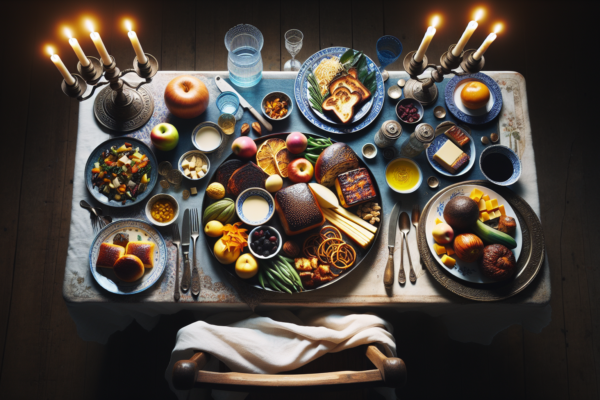
Shabbat Dinner Menu Planner: 5 Complete Friday Night Menus
Five complete Shabbat dinner menus that take the guesswork out of Friday...
View Recipe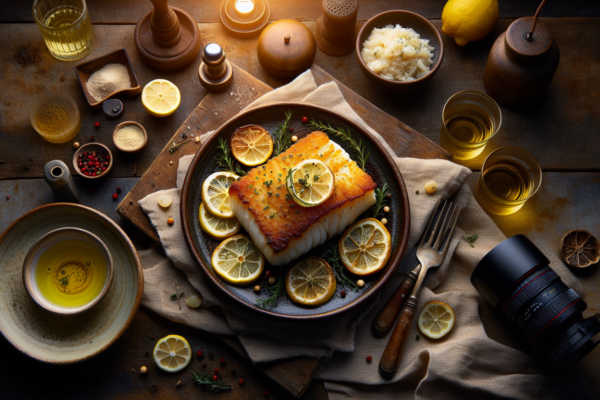
Crispy Baked Cod with Lemon (Kosher Recipe)
This foolproof baked cod recipe delivers restaurant-quality results with a golden, crispy...
View Recipe
Savory Moroccan Chicken with Olives and Preserved Lemon
Experience the rich, exotic flavors of Morocco with this Kosher Moroccan Chicken...
View Recipe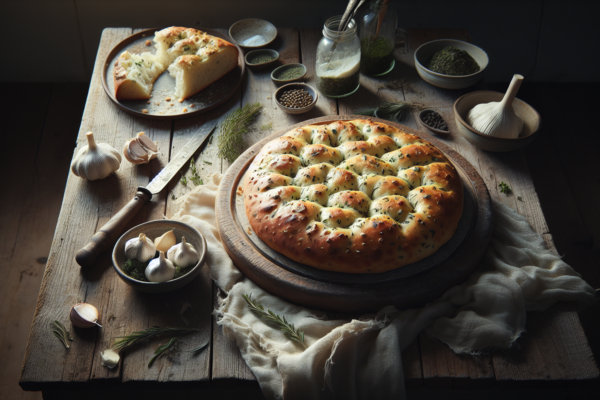
Fluffy Garlic and Herb Focaccia Recipe (Pareve)
This fluffy garlic and herb focaccia uses a wet dough and long...
View Recipe