
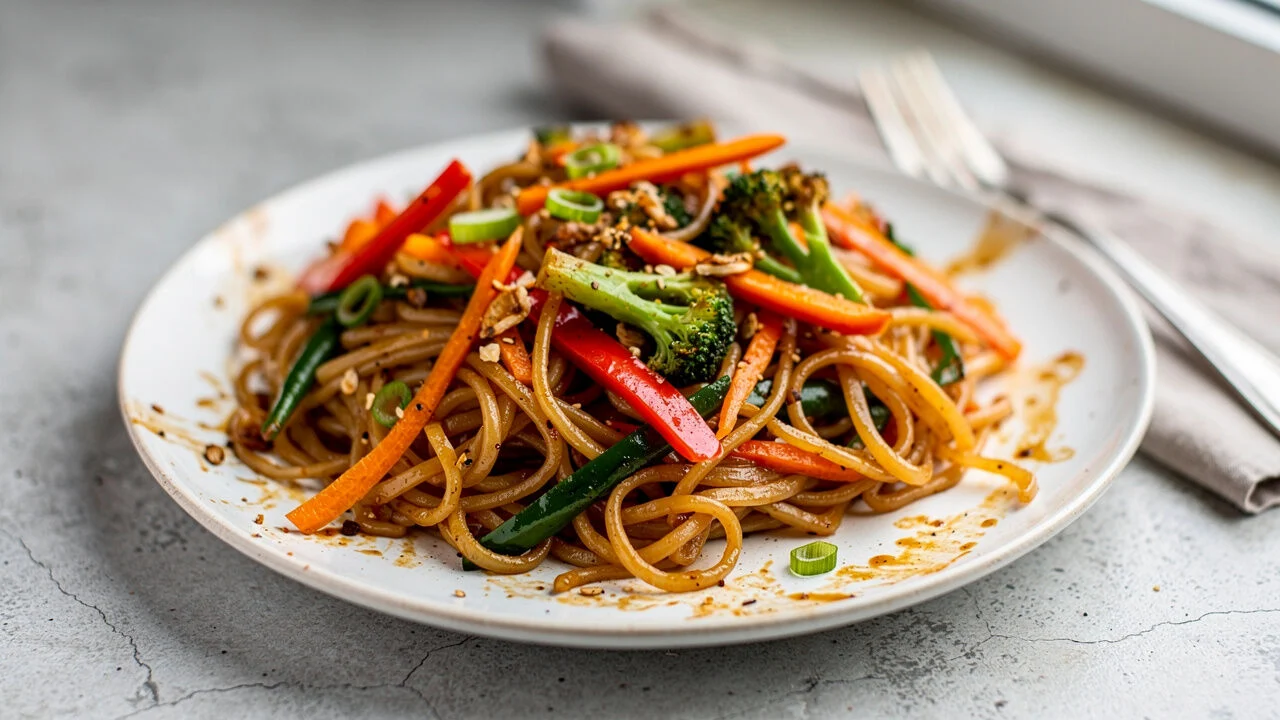
Vegetable pad thai has all the sweet, sour and savory flavors of the takeout favorite: chewy rice noodles stir-fried with egg, carrots, peppers, snow peas and bean sprouts, finished with peanuts, cilantro and lime.
Getting the Sauce and Noodles Right
The sauce balances brown sugar, soy sauce, tamarind paste and rice vinegar, with sriracha for heat. If you can’t find tamarind, use lime juice and a little extra sugar. Soak the rice noodles only until pliable, not fully soft; they finish cooking in the pan, and oversoaked noodles break apart and turn mushy. Have everything prepped before you start, since the stir-frying goes fast.
Kosher Notes
Traditional pad thai uses fish sauce and often shrimp. This version uses soy sauce instead and skips the shellfish, so it’s pareve. Check that the soy sauce, tamarind paste and rice noodles have a reliable hechsher. Cubed firm tofu or tempeh adds protein.
Serving
Pad thai is best served right away, with extra lime and cilantro. Leftovers keep for 2 days.
Ingredients
What I use for this recipe
As an Amazon Associate I earn from qualifying purchases.
Method
- Soak rice noodles in warm water for 15-20 minutes until pliable but still firm. They should bend without breaking but not be fully soft. Drain and set aside.
- Whisk together brown sugar, soy sauce, tamarind paste, rice vinegar, and sriracha in a small bowl. Set aside.
- Prepare all vegetables and have them ready near the stove in separate bowls.
- Heat 1 tablespoon oil in a large wok or skillet over medium-high heat. Add beaten eggs and scramble until just set. Transfer to a plate and set aside.
- Add remaining 2 tablespoons oil to the same pan. Add garlic and cook for 30 seconds until fragrant.
- Add carrots and bell pepper, stir-fry for 2 minutes until starting to soften.
- Add snow peas and cook another minute until bright green and crisp-tender.
- Add drained noodles and sauce mixture. Toss everything together for 2-3 minutes until noodles are heated through and coated with sauce.
- Add scrambled eggs, green onions, bean sprouts, and cilantro. Toss gently for another minute until bean sprouts are slightly wilted but still crunchy.
- Serve immediately topped with chopped peanuts, extra cilantro, and lime wedges on the side.
Notes
Get a Shabbat menu every Thursday
A main, sides and a dessert from our kitchen, all kosher together and ready to cook. Free, and you can unsubscribe anytime.
One email a week. We never share your address. Privacy policy
You Might Also Like

Easy Baked Sweet Potato Fries (Perfectly Crispy Every Time!)
Transform ordinary sweet potatoes into perfectly crispy fries with this foolproof method....
View Recipe
Classic Kosher Spaghetti and Meatballs with Rich Tomato Sauce
Tender beef meatballs simmered in rich tomato sauce over perfectly cooked spaghetti....
View Recipe
Kosher Mushroom Cheese Risotto – Creamy Comfort Food
This creamy mushroom and cheese risotto builds layers of earthy flavor with...
View Recipe
Easy Kosher Butternut Squash Ravioli With Crispy Sage
Homemade butternut squash ravioli with crispy sage butter sauce brings restaurant-quality pasta...
View Recipe