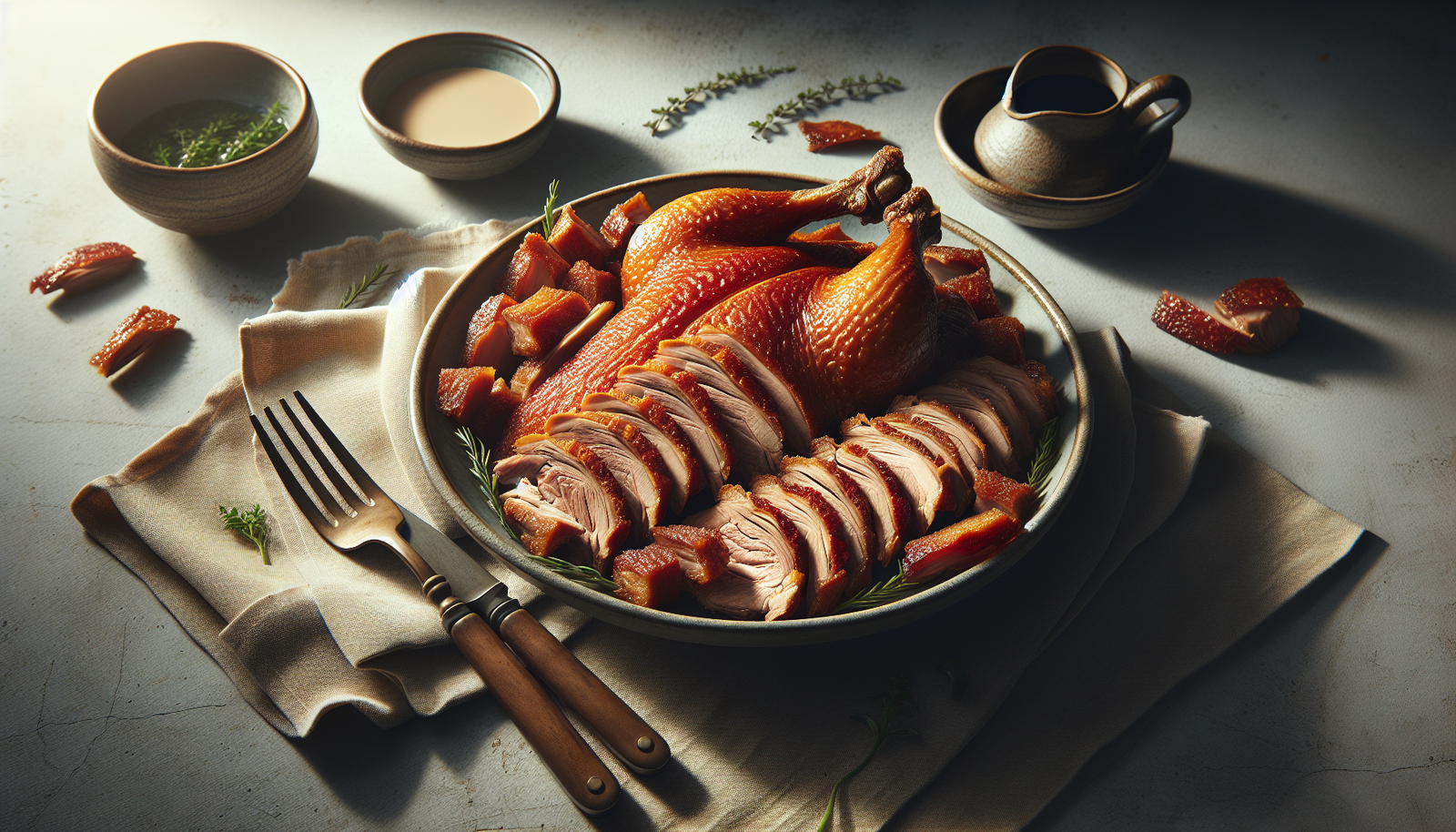
Ingredients
Method
Curing the Duck
- Pat duck legs completely dry with paper towels. In a large dish, combine kosher salt, smashed garlic, thyme sprigs, bay leaves, and cracked peppercorns.
- Rub the salt mixture all over the duck legs, making sure to get into all the crevices. Place duck legs in the dish, cover tightly, and refrigerate for at least 12 hours or overnight.
Confiting the Duck
- Preheat oven to 200°F. Remove duck legs from cure and brush off excess salt and aromatics. Pat dry again.
- In a heavy oven-safe pot or Dutch oven, warm the duck fat over low heat until just melted. Add duck legs, making sure they're completely submerged in fat. Add rosemary sprigs if using.
- Cover pot and place in oven. Cook for 3 hours, until meat is fork-tender and nearly falling off the bone.
- Carefully remove duck legs from fat and place on a wire rack set over a baking sheet. Let cool completely, then refrigerate until ready to serve.
Finishing and Serving
- When ready to serve, preheat broiler or heat a large cast iron skillet over medium-high heat.
- If broiling: Place duck legs skin-side up on a baking sheet. Broil 4-5 inches from heat for 3-5 minutes until skin is golden and crispy.
- If using skillet: Place duck legs skin-side down in hot pan. Cook 3-4 minutes until skin is crispy and golden, then flip and warm through for 1-2 minutes.
- Serve immediately while skin is still crispy.
Notes
Duck confit can be stored in the refrigerator for up to 5 days submerged in the cooking fat. The rendered duck fat can be strained and saved for roasting vegetables or making the most incredible fried potatoes. For best results, use a meat thermometer to ensure the fat temperature stays around 200°F during cooking. If you can't find enough duck fat, you can supplement with kosher chicken fat or neutral oil.