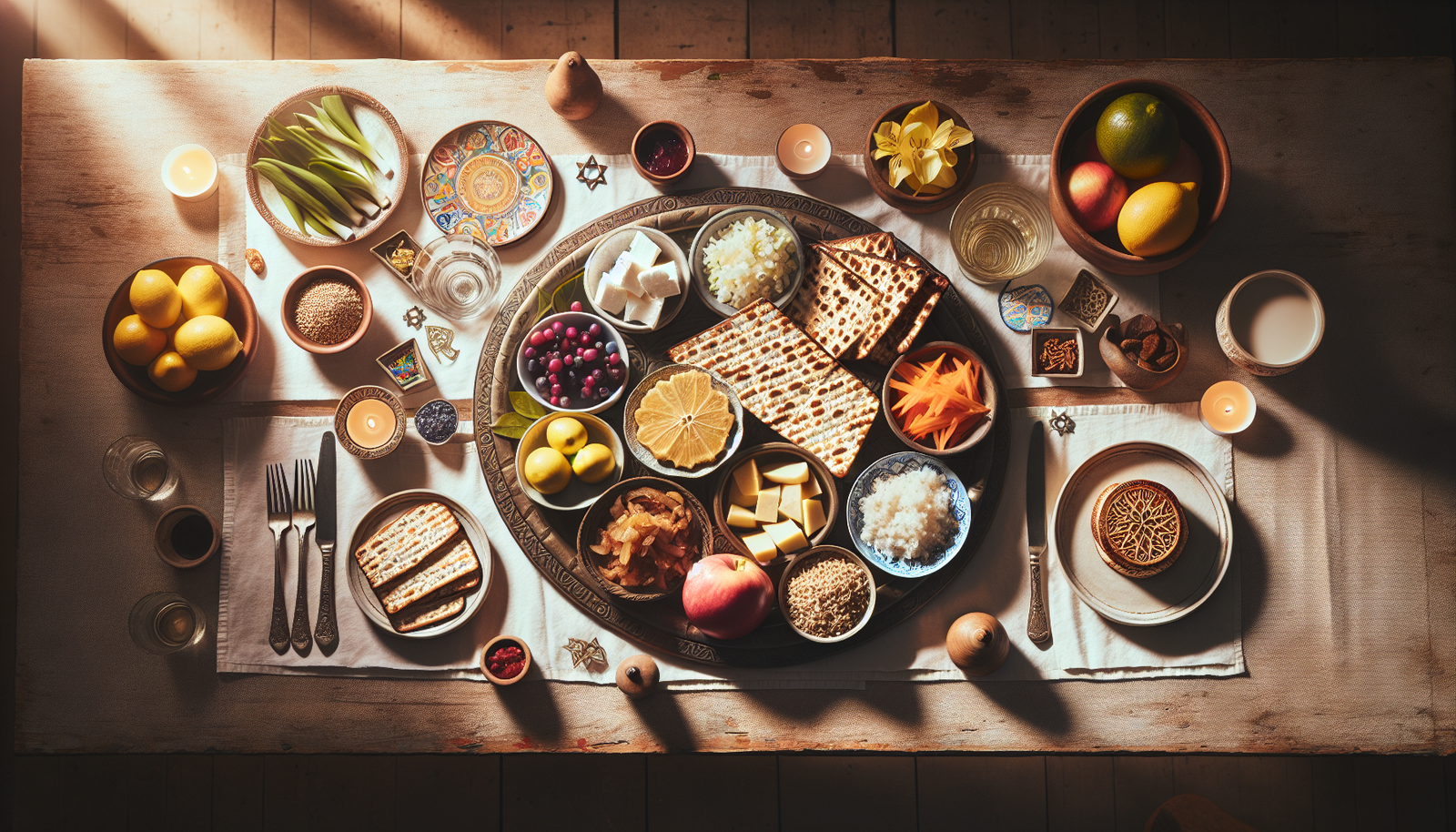
Ingredients
Method
Prepare the Roasted Elements
- Preheat your oven to 400°F (200°C).
- Place the shank bone on a baking sheet and roast for 10-15 minutes until browned. Let cool completely.
- Hard-boil the egg by placing it in boiling water for 10 minutes, then transfer to ice water. Once cool, carefully remove shell.
- Place the peeled egg on the same baking sheet and roast for 5 minutes until lightly browned. Set aside to cool.
Make the Charoset
- Dice the apple into small pieces, about 1/4-inch cubes.
- Mix the diced apple with chopped walnuts in a small bowl.
- Add wine or grape juice, cinnamon, and honey if using. Stir until mixture holds together but isn't too wet.
- Taste and adjust sweetness or wine as needed. The texture should resemble mortar.
Prepare Fresh Elements
- Wash and dry the parsley thoroughly. Select the nicest sprigs for the plate.
- If using fresh horseradish, grate it carefully (it's very strong). If using prepared, measure out portions.
- Wash and dry the romaine lettuce leaves. Choose unblemished leaves.
- Mix 1/4 cup salt with 1 cup water to create salt water for dipping.
Arrange the Seder Plate
- Place the roasted shank bone at the upper right position on your Seder plate.
- Put the roasted egg at the upper left position.
- Place the charoset at the middle right position.
- Put the maror (horseradish) at the middle left position.
- Place the karpas (parsley) at the bottom center position.
- If using chazeret as a sixth element, place it at the bottom left or right, depending on your family tradition.
- Set the bowl of salt water nearby for dipping the karpas during the Seder.
Notes
The Seder plate arrangement can vary slightly between different Jewish communities, but the elements remain the same. You can prepare the roasted items up to 2 days ahead and store them covered in the refrigerator. Make the charoset on the day of your Seder for best flavor and texture. Some families use a chicken neck instead of a shank bone, which is perfectly acceptable. The plate serves as a centerpiece and teaching tool during the Seder, so don't worry about people eating directly from it. Provide separate portions of maror and charoset for the actual meal.