Ingredients
Method
Prepare the filling
- Preheat oven to 425°F. Toss cubed butternut squash with olive oil and spread on a large baking sheet. Roast for 25-30 minutes until tender and lightly caramelized at edges.
- Let squash cool slightly, then mash with a fork until mostly smooth but still with some texture. Stir in parmesan, nutmeg, salt, and pepper. Set aside to cool completely.
Make the pasta dough
- Place flour in a large bowl and make a well in the center. Crack eggs into the well and add olive oil and salt.
- Using a fork, gradually incorporate flour into the eggs until a shaggy dough forms. Turn out onto a floured surface and knead for 8-10 minutes until smooth and elastic.
- Wrap dough tightly in plastic wrap and let rest at room temperature for 30 minutes.
Assemble the ravioli
- Divide dough into 4 portions. Working with one piece at a time (keep others covered), roll pasta through a pasta machine or with a rolling pin until very thin, about 1/16 inch thick.
- Cut pasta sheets into 3-inch squares. Place 1 tablespoon of filling in center of half the squares. Brush edges with water, then top with remaining squares.
- Press edges firmly to seal, removing any air bubbles. Crimp edges with a fork. Place finished ravioli on a floured baking sheet and cover with a damp towel.
Cook and serve
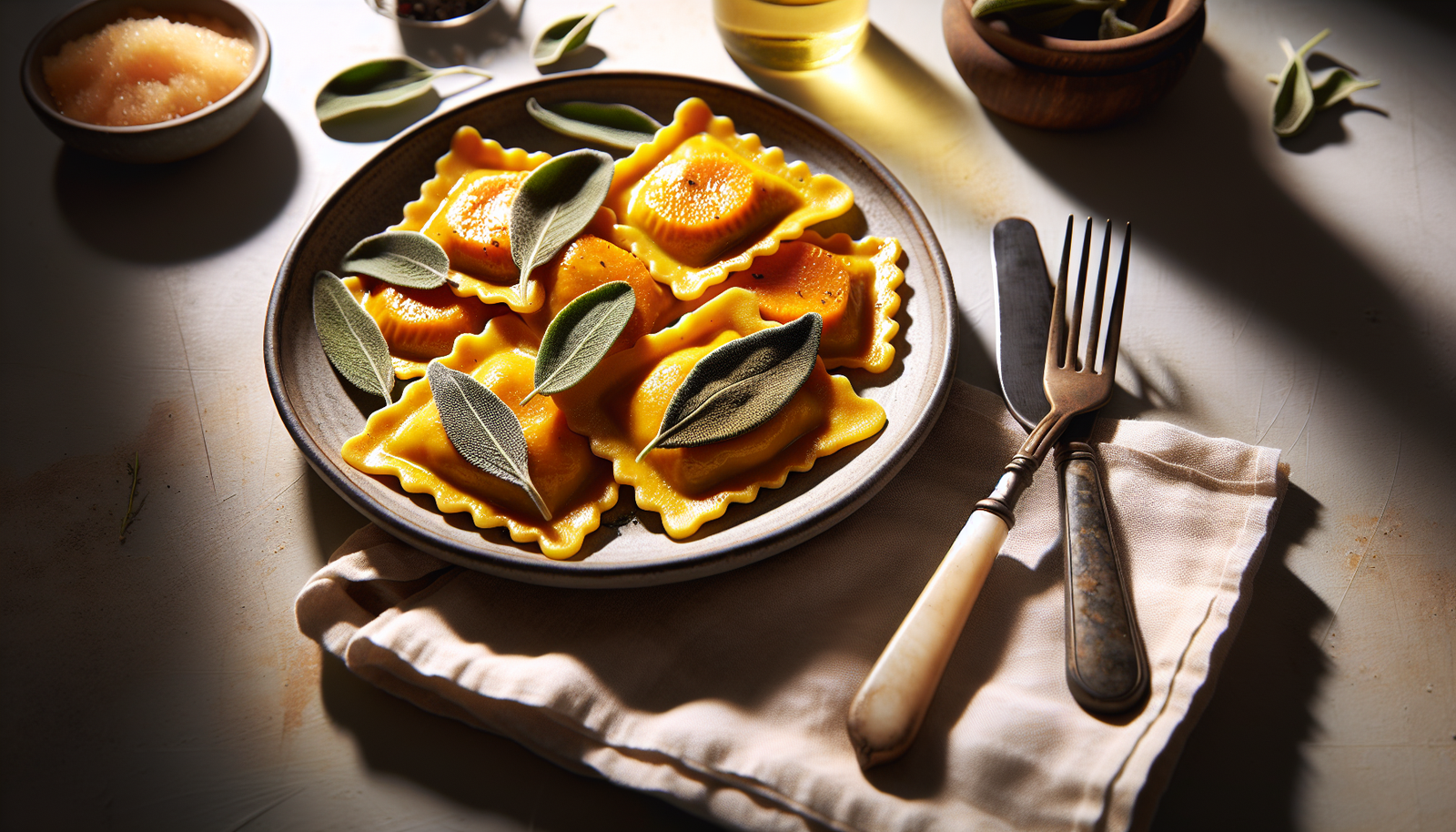
- Bring a large pot of salted water to a gentle boil. Meanwhile, melt butter in a large skillet over medium heat. Add sage leaves and cook until butter turns golden brown and sage is crispy, about 3-4 minutes.
- Cook ravioli in batches for 3-4 minutes until they float to the surface. Using a slotted spoon, transfer directly to the skillet with brown butter.
- Gently toss ravioli with the sage butter, adding a splash of pasta cooking water if needed to create a light sauce. Season with salt and serve immediately with grated parmesan.
Notes
Ravioli can be made ahead and frozen on parchment-lined baking sheets, then stored in freezer bags for up to 3 months. Cook directly from frozen, adding 1-2 extra minutes to cooking time. If you don't have a pasta machine, roll the dough as thin as possible with a rolling pin. The filling should be completely cool before assembling to prevent the pasta from getting soggy.