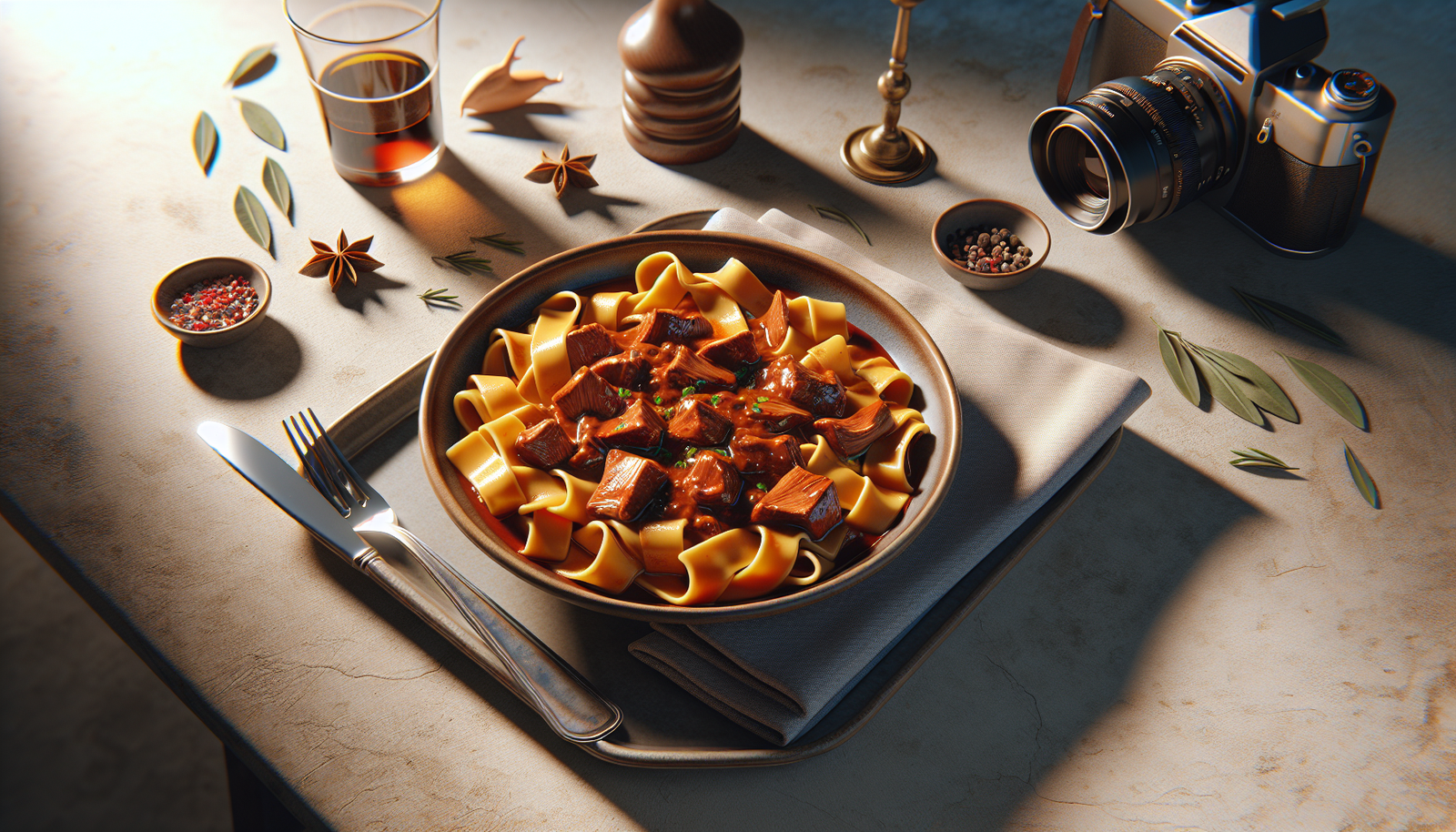
Ingredients
Method
Prepare the Duck
- Season duck pieces generously with kosher salt and black pepper on both sides. Let sit at room temperature for 30 minutes.
- Heat a large Dutch oven or heavy pot over medium-high heat. Add olive oil.
- Brown duck pieces skin-side down first, about 6-8 minutes per side until golden brown. Work in batches if needed. Remove duck and set aside.
Build the Sauce Base
- Pour off all but 3 tablespoons of fat from the pot (save the extra duck fat for another use).
- Add diced onion, carrots, and celery to the pot. Cook for 8-10 minutes until softened.
- Add minced garlic and cook for another minute until fragrant.
- Pour in kosher red wine, scraping up any browned bits from the bottom of the pot. Let it simmer for 3-4 minutes to cook off some alcohol.
Braise the Duck
- Add crushed tomatoes, chicken stock, thyme, bay leaves, and rosemary to the pot. Stir well.
- Return duck pieces to the pot, nestling them into the sauce. The liquid should almost cover the duck.
- Bring to a simmer, then reduce heat to low. Cover and cook for 2 to 2.5 hours, until duck is falling off the bone.
- Remove duck pieces from the sauce and let cool slightly. Remove and discard skin, then shred the meat with two forks.
- Remove herb sprigs and bay leaves from the sauce. Return shredded duck to the pot and simmer uncovered for 15-20 minutes until sauce thickens slightly.
Finish and Serve
- Meanwhile, bring a large pot of salted water to boil. Cook pappardelle according to package directions until al dente.
- Reserve 1 cup pasta cooking water before draining.
- Add drained pasta to the duck ragu and toss gently. Add pasta water a little at a time if needed to help the sauce coat the noodles.
- Taste and adjust seasoning with salt and pepper. Serve immediately, garnished with fresh chopped parsley.
Notes
This ragu tastes even better the next day. Store leftovers in the refrigerator for up to 3 days. You can substitute duck legs with duck breast if preferred, but reduce cooking time to 1.5 hours. The reserved duck fat can be stored in the refrigerator and used for roasting potatoes or vegetables.