
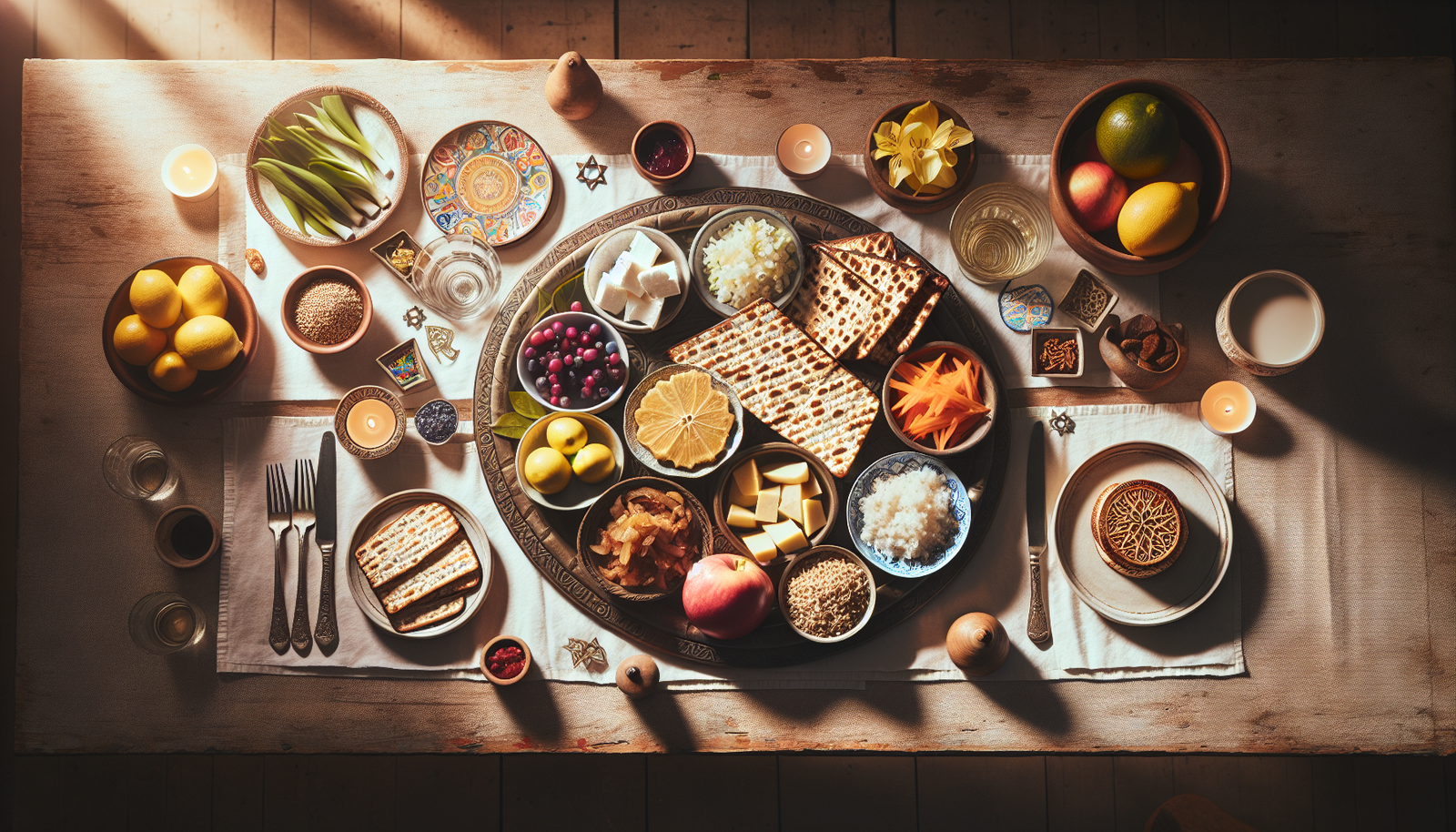
Setting up a proper Seder plate can feel overwhelming if you’ve never done it before. I remember the first time I hosted Passover at my own home, staring at my grandmother’s beautiful ceramic plate and trying to remember exactly where everything went. The good news is that while each item has deep significance, the actual setup isn’t complicated once you know what you’re doing.
The Seder plate holds six symbolic foods that tell the story of our ancestors’ journey from slavery to freedom in Egypt. Each item represents a different aspect of that experience, from the bitterness of bondage to the sweetness of freedom. You’ll arrange these foods in specific spots around the plate, though different Jewish communities sometimes place them slightly differently. What matters most is having all the elements present and understanding their meanings.
Understanding the Six Seder Plate Elements
I’ve learned that preparing the Seder plate works best when you gather everything ahead of time. Some items like the roasted egg and shank bone can be prepared days in advance, while others like the charoset are better made fresh on the day of your Seder. The bitter herbs need to stay crisp, so I usually prep those just before guests arrive. Don’t stress about making everything perfect. The beauty of the Seder plate lies in its symbolism, not in having restaurant-quality presentation.
Practical Tips for Seder Plate Preparation
This guide will walk you through each element, explain what it represents, and give you practical tips for preparation. Whether you’re hosting your first Seder or just want to refresh your memory, you’ll have everything you need to create a meaningful centerpiece for your Passover table.
Ingredients
Method
- Preheat your oven to 400°F (200°C).
- Place the shank bone on a baking sheet and roast for 10-15 minutes until browned. Let cool completely.
- Hard-boil the egg by placing it in boiling water for 10 minutes, then transfer to ice water. Once cool, carefully remove shell.
- Place the peeled egg on the same baking sheet and roast for 5 minutes until lightly browned. Set aside to cool.
- Dice the apple into small pieces, about 1/4-inch cubes.
- Mix the diced apple with chopped walnuts in a small bowl.
- Add wine or grape juice, cinnamon, and honey if using. Stir until mixture holds together but isn't too wet.
- Taste and adjust sweetness or wine as needed. The texture should resemble mortar.
- Wash and dry the parsley thoroughly. Select the nicest sprigs for the plate.
- If using fresh horseradish, grate it carefully (it's very strong). If using prepared, measure out portions.
- Wash and dry the romaine lettuce leaves. Choose unblemished leaves.
- Mix 1/4 cup salt with 1 cup water to create salt water for dipping.
- Place the roasted shank bone at the upper right position on your Seder plate.
- Put the roasted egg at the upper left position.
- Place the charoset at the middle right position.
- Put the maror (horseradish) at the middle left position.
- Place the karpas (parsley) at the bottom center position.
- If using chazeret as a sixth element, place it at the bottom left or right, depending on your family tradition.
- Set the bowl of salt water nearby for dipping the karpas during the Seder.
Notes
You Might Also Like

Perfect Kosher Turkey Meatballs – Tender & Flavorful
These tender kosher turkey meatballs are juicy, flavorful, and surprisingly easy to...
View Recipe
Easy Chicken Noodle Soup From Scratch
This homemade chicken noodle soup comes together in just one hour using...
View Recipe
Perfect Kosher Beef Wellington Recipe – Elegant Main Course
Transform the classic Beef Wellington into a stunning kosher centerpiece with tender...
View Recipe
Irresistible Honey Garlic Glazed Salmon: A Kosher Delight
This Honey Garlic Glazed Salmon is a kosher delight, featuring a perfect...
View Recipe