
Duck confit has this reputation for being restaurant-only territory, but I’ve been making it at home for years now and it’s honestly not as complicated as people think. The technique comes from southwestern France, where cooks discovered that slow-cooking duck in its own fat creates the most tender, flavorful meat you can imagine. Plus, that rendered fat becomes liquid gold for roasting potatoes later.
Why Duck Confit Works So Well at Home
The key to great duck confit lies in the salt cure and the low, slow cooking process. I cure my duck legs for at least 12 hours (sometimes overnight works better with my schedule) with coarse kosher salt, garlic, and fresh thyme. This draws out moisture and infuses the meat with flavor from the inside out. After that, it’s just a matter of cooking the legs gently in duck fat at around 200°F for about three hours.
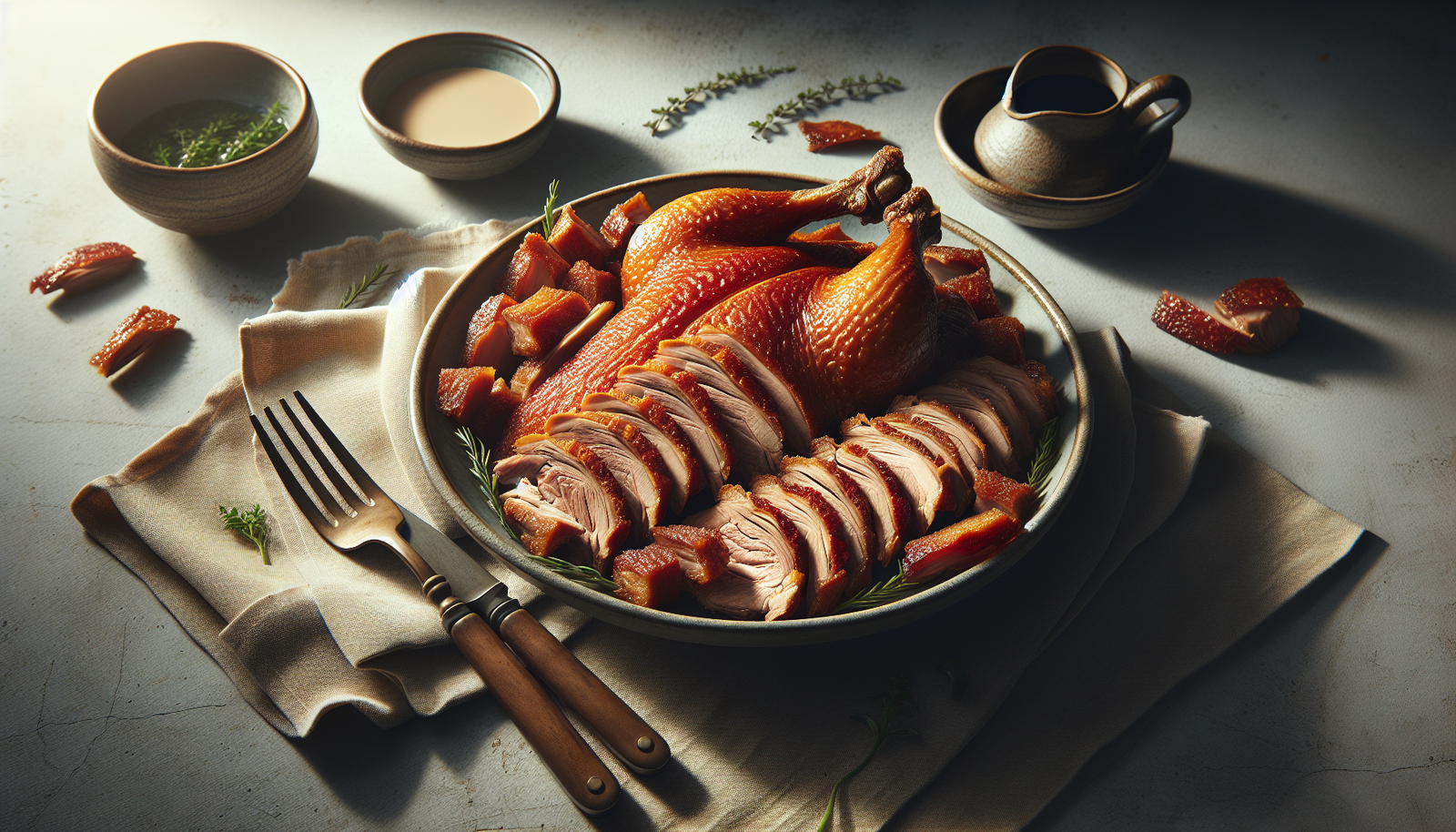
What makes this version special is the final crisping step. After the confit process, I chill the duck completely, then blast it under the broiler or in a hot skillet to get that skin crackling and golden. The contrast between the crispy exterior and the fork-tender meat inside is exactly what makes duck confit so memorable.
The Secret to Perfect Crispy Skin
I love serving this for Friday night dinner when I want something that feels special but doesn’t require last-minute fussing. The duck can be confited days ahead, then just crisped up before serving. It pairs beautifully with roasted root vegetables and a simple green salad dressed with some of that precious duck fat.
Ingredients
Method
- Pat duck legs completely dry with paper towels. In a large dish, combine kosher salt, smashed garlic, thyme sprigs, bay leaves, and cracked peppercorns.
- Rub the salt mixture all over the duck legs, making sure to get into all the crevices. Place duck legs in the dish, cover tightly, and refrigerate for at least 12 hours or overnight.
- Preheat oven to 200°F. Remove duck legs from cure and brush off excess salt and aromatics. Pat dry again.
- In a heavy oven-safe pot or Dutch oven, warm the duck fat over low heat until just melted. Add duck legs, making sure they're completely submerged in fat. Add rosemary sprigs if using.
- Cover pot and place in oven. Cook for 3 hours, until meat is fork-tender and nearly falling off the bone.
- Carefully remove duck legs from fat and place on a wire rack set over a baking sheet. Let cool completely, then refrigerate until ready to serve.
- When ready to serve, preheat broiler or heat a large cast iron skillet over medium-high heat.
- If broiling: Place duck legs skin-side up on a baking sheet. Broil 4-5 inches from heat for 3-5 minutes until skin is golden and crispy.
- If using skillet: Place duck legs skin-side down in hot pan. Cook 3-4 minutes until skin is crispy and golden, then flip and warm through for 1-2 minutes.
- Serve immediately while skin is still crispy.
Notes
You Might Also Like

Ultimate Kosher Mac and Cheese Recipe with Three-Cheese Blend
This kosher mac and cheese uses a three-cheese blend and proper roux...
View Recipe
Authentic Israeli Jachnun: A Traditional Shabbat Delight
Discover the rich flavors of Jachnun, a traditional slow-cooked Israeli pastry perfect...
View Recipe
One-Pan Kosher Mushroom Chicken Skillet with Creamy Herb Sauce
This one-pan kosher chicken skillet combines tender chicken thighs with earthy mushrooms...
View Recipe
Classic Kosher Stuffed Mushrooms With Breadcrumb Filling
Tender mushroom caps filled with savory breadcrumb stuffing made from challah, herbs,...
View Recipe