
I first encountered kubaneh at a Yemenite friend’s Shabbat table, and I was immediately hooked by this pull-apart bread that had been slowly baking all night. Unlike challah, which gets its beautiful golden color from egg wash, kubaneh develops its deep amber hue from hours of low-temperature baking. The result is something between bread and pastry, with layers that separate into tender, buttery strips perfect for dipping into zhug or spreading with honey.
What makes kubaneh so special is its overnight baking method, which was originally developed to work within Shabbat observance rules. You start the bread on Friday afternoon, and it bakes slowly at a low temperature until Saturday morning. The long, gentle baking creates an incredibly moist interior while the outside develops a beautiful crust. I’ve found that using a heavy pot with a tight lid is crucial for getting the texture right.
This recipe uses a yeasted dough that gets rolled thin, brushed with plenty of oil, and then rolled up like a cinnamon roll before being placed in the pot. The key is not to rush the rising time and to make sure your oil coating is generous. I use neutral oil rather than butter to keep it pareve, which means it can be served with either meat or dairy meals.
Kubaneh is perfect for Shabbat morning because it’s ready when you wake up, filling the house with an amazing aroma. Serve it alongside hard-boiled eggs, fresh tomatoes, and that spicy zhug if you can handle the heat. It also makes an excellent base for breakfast sandwiches or can be torn apart and used for dipping into shakshuka.

Ingredients
Method
- In a small bowl, combine warm water, sugar, and yeast. Let stand for 5-10 minutes until foamy and active.
- In a large mixing bowl, combine flour and salt. Make a well in the center and pour in the yeast mixture, ⅓ cup oil, and honey.
- Mix until a shaggy dough forms, then turn out onto a lightly floured surface. Knead for 8-10 minutes until the dough is smooth and elastic.
- Place dough in an oiled bowl, cover with a damp towel, and let rise in a warm place for 1-2 hours until doubled in size.
- Punch down the dough and divide into 6 equal pieces. On a lightly floured surface, roll each piece into a thin rectangle, about 12x8 inches.
- Brush each rectangle generously with oil, then roll up tightly from the long side to form a log. Pinch the seam to seal.
- Generously oil a heavy 4-quart pot with a tight-fitting lid. Coil the first dough log in the center of the pot, then continue coiling the remaining logs around it, creating a spiral pattern.
- Brush the top of the dough with more oil, cover tightly with the lid, and let rise for 30 minutes.
- Preheat oven to 200°F (95°C). Place the covered pot in the oven and bake for 12 hours or overnight.
- Remove from oven and let cool for 10 minutes before carefully turning out onto a serving platter. Pull apart into individual portions and serve warm.
Notes
You Might Also Like
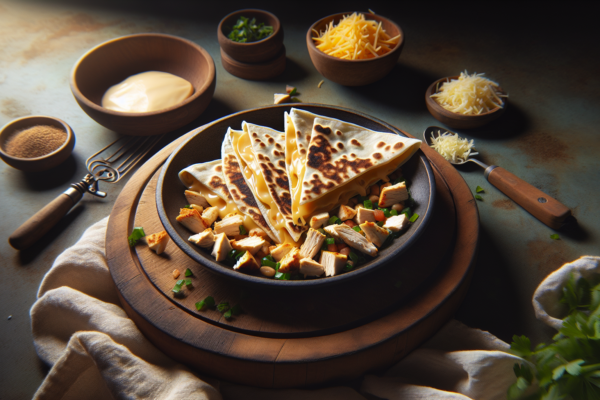
Easy Kosher Chicken Quesadillas with Dairy Free Cheese
Crispy flour tortillas filled with seasoned shredded chicken and melty dairy free...
View Recipe
High-Protein Kosher Meal Prep Bowls with Turkey and Quinoa
These protein-packed kosher meal prep bowls with seasoned turkey and quinoa stay...
View Recipe
Deliciously Kosher Caesar Salad with Homemade Dressing
Experience the classic Caesar salad, reimagined for kosher kitchens, with a homemade...
View Recipe
Classic Kosher Turkey Meatballs in Rich Marinara Sauce
These tender kosher turkey meatballs simmer in a rich marinara sauce that's...
View Recipe