
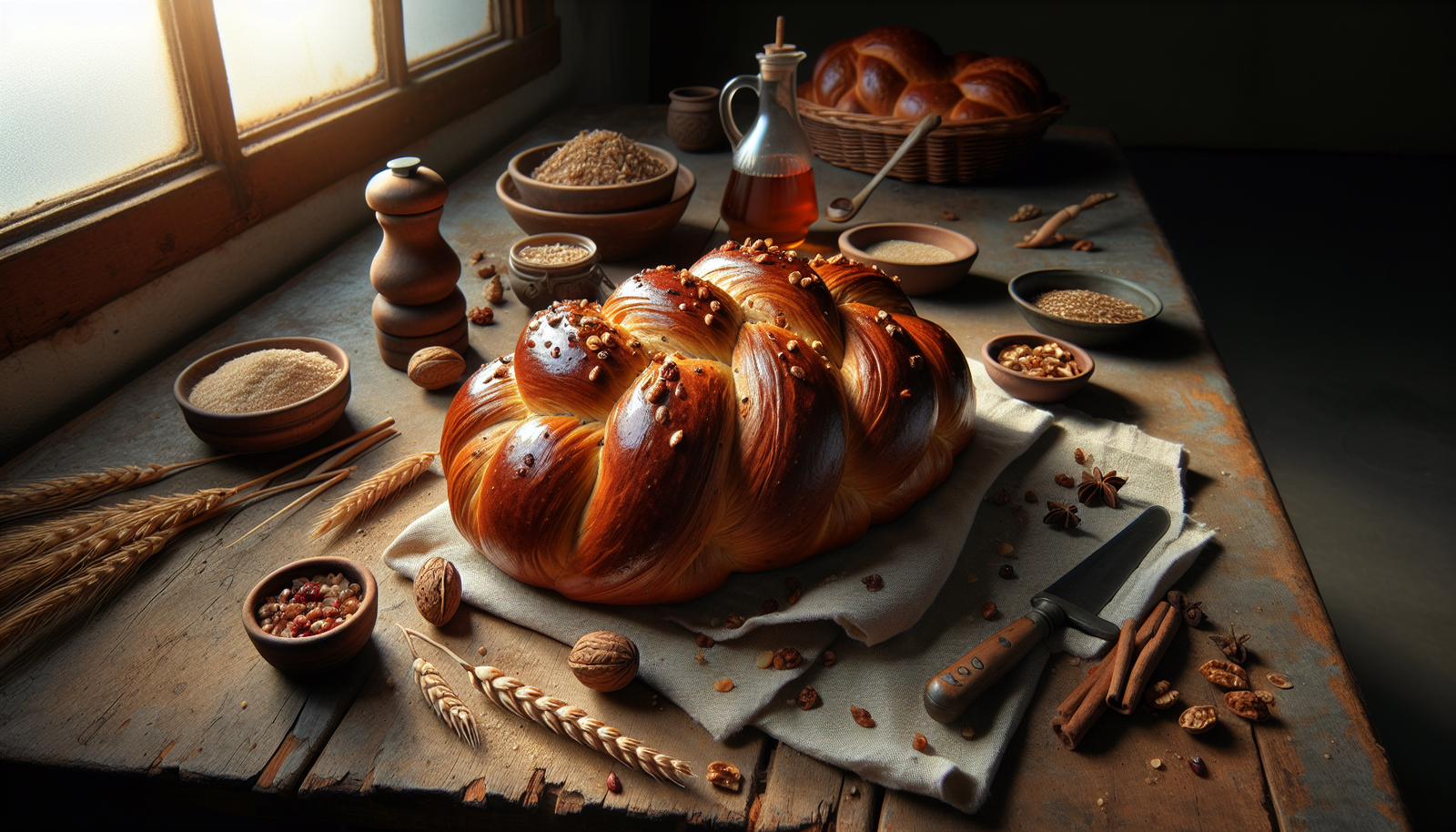
I’ve been baking challah for Friday nights for years now, but switching to spelt flour changed everything about this beloved bread. The nutty, slightly sweet flavor that spelt brings to challah adds such depth without overwhelming the classic taste we all love. My grandmother would probably raise an eyebrow at me messing with her white flour recipe, but I think even she’d approve of how tender and flavorful this version turns out.
Spelt is an ancient grain that’s actually a distant cousin to modern wheat. It’s got more protein and fiber than regular flour, plus it digests easier for some people. When you’re making challah that’ll sit on your Shabbat table for hours, you want something substantial but not heavy. Spelt delivers exactly that. The dough handles beautifully once you get the feel for it, though it can be a bit stickier than what you’re used to with all-purpose flour.
Why Spelt Flour Makes Better Challah
The secret to getting spelt flour challah just right is in the kneading and rising times. Spelt develops gluten differently, so I knead it for about 8 minutes instead of the usual 10. And here’s the thing about the braiding technique that really matters: keep your strands thick enough. Spelt challah can look a little flat if you roll the dough too thin, but when you braid it with good thick ropes, it rises into these gorgeous, substantial loaves.
The Key to Perfect Spelt Challah Braiding
This challah is perfect for your Friday night table, obviously, but I’ve found it makes incredible French toast on Sunday mornings too. The nutty flavor pairs beautifully with honey or a drizzle of good maple syrup. Store any leftover slices in the freezer and toast them straight from frozen for the best texture.
Ingredients
Method
- In a large mixing bowl, dissolve yeast in warm water. Let stand for 5 minutes until foamy.
- Whisk in honey, 2 eggs, oil, and salt until well combined.
- Add spelt flour gradually, mixing with a wooden spoon until a shaggy dough forms.
- Turn dough onto a lightly floured surface and knead for 8 minutes until smooth and elastic. Spelt dough will feel slightly different than regular wheat dough, more tender but still workable.
- Place dough in an oiled bowl, cover with damp towel, and let rise in a warm place for 1 hour until doubled.
- Punch down dough and divide into 6 equal pieces. Roll each piece into a rope about 16 inches long.
- Braid the 6 strands together: lay them parallel, pinch tops together, then alternate crossing outside strands over the middle strands, working your way down. Pinch bottom ends together and tuck under.
- Place braided loaf on a parchment-lined baking sheet. Cover and let rise 45 minutes until puffy.
- Preheat oven to 375°F. Beat remaining egg and brush over challah. Sprinkle with poppy seeds.
- Bake for 30-35 minutes until golden brown and hollow-sounding when tapped. Internal temperature should reach 190°F.
- Cool on wire rack for at least 30 minutes before slicing.
Notes
You Might Also Like

Perfect Baked Stuffed Portobello Mushrooms with Quinoa
These hearty stuffed portobello mushrooms filled with seasoned quinoa and vegetables make...
View Recipe
Passover Chocolate Chip Banana Bread (Flourless and Kosher)
This flourless Passover chocolate chip banana bread uses almond flour for incredible...
View Recipe
Classic Kosher Veal Roast With Root Vegetables
This elegant kosher veal roast with herb crust and roasted root vegetables...
View Recipe
Easy Kosher Chicken and Dumpling Casserole Recipe
This one-dish kosher chicken and dumpling casserole combines tender chicken thighs with...
View Recipe